AI Prompts and the Creative Power of Description
When generative AI first began to gain momentum and new platforms flooded the market, one of my early concerns was that AI might slowly erode the human ability to think, imagine, and create independently. I feared that we were outsourcing too much of our creative power to machines. However, it didn’t take long for me to realize that this concern wasn’t entirely true.
Rather than stifling human creativity, generative AI has, in many ways, challenged us to become better thinkers and clearer describers of our ideas. And that, I believe, is a good thing.
As a creative designer who works closely with authors—designing book covers and other creative materials, one of the most common challenges I encounter is not a lack of ideas, but a lack of clarity. Clients often know they want something designed, whether it’s a book cover, logo, flyer, or visual identity, yet struggle to articulate what they actually want it to look or feel like. This stage can easily become the most time-consuming and frustrating part of the creative process.
Often, the breakthrough comes when I ask a simple question: Have you seen a design somewhere that feels close to what you have in mind? The moment a reference is introduced, clarity emerges, and the project moves forward.
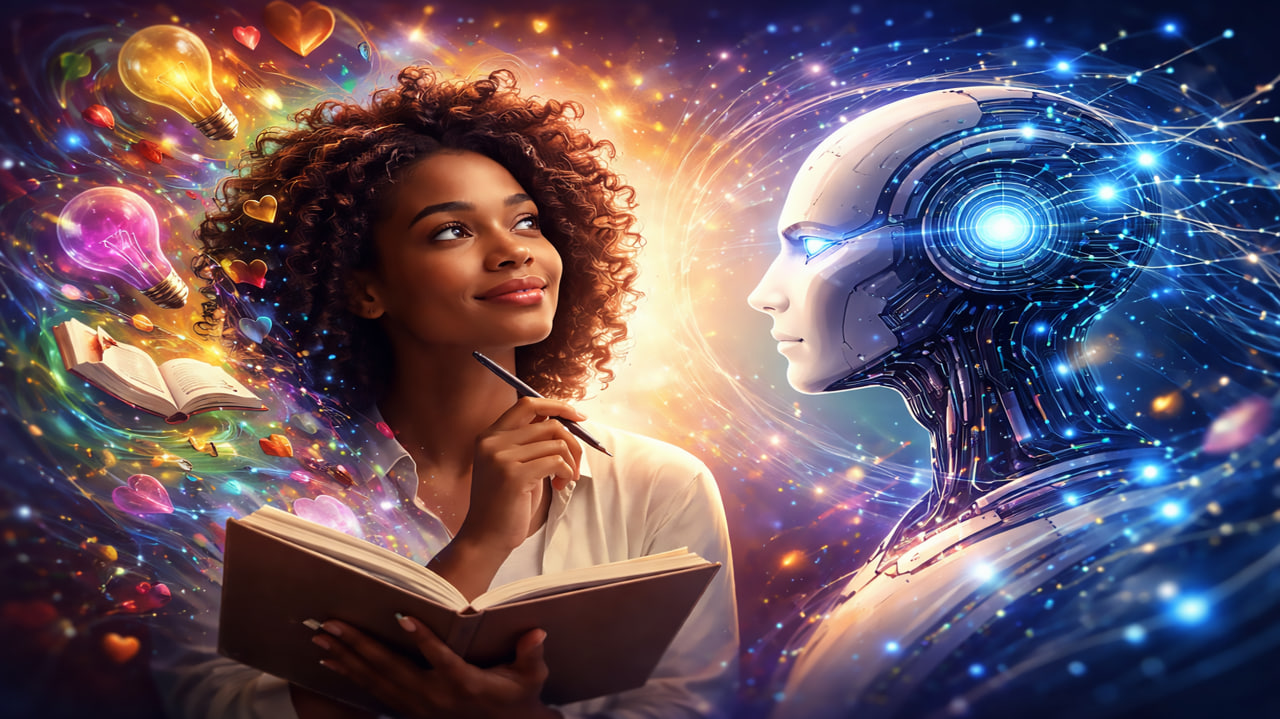
This is precisely how generative AI works with us. AI is driven by prompts, descriptions that tell it what to create. The clearer and more detailed the description, the better the outcome. Vague prompts produce vague results, while thoughtful, well-articulated prompts unlock impressive possibilities. In fact, as you use generative AI more closely, you begin to see that promptings actually work better when they are “spoken”. And by this, I mean, when you create prompts like you are speaking with someone that you are free with. The more natural and at liberty you get with describing your prompts, the better AI understands what you need and the better the result that is created.

Now imagine if we carried this same descriptive discipline into our daily lives. What if we spent more time sitting with our thoughts, reflecting deeply on our ideas, and learning to articulate them clearly? What if we could express what we truly mean to our spouses, family members, friends, or collaborators without confusion or misinterpretation?
I believe we would not only accomplish more, but also build stronger relationships with ourselves and with others. We can build better societies if we spend more time understanding people.
One of the most damaging forces in relationships today, especially within families and marriages, is poor communication. At its core, communication is simply the ability to describe thoughts and feelings clearly and honestly. And this ability doesn’t come from external tools; it comes from within. It is rooted in the mind’s creative and descriptive power.
Every healthy relationship with others begins with a healthy relationship within ourselves. All creation, all expression, and all meaningful connection flow from the inside outward. That is where our true creative power lives.